In our 2025 Plano Annual Market Report, we revealed that 29% of homes listed last year didn’t sell. That’s nearly one in three sellers who had to pull their listing, relist, or accept less than they hoped for. This is the third article in my home-sellers series where I’m sharing an insider's perspective on what separates the homes that sell from the ones that sit — so more sellers can get it right in 2026.
Here's something most agents won't say out loud:
Buyers can feel when a house isn’t ready to sell.
Not just "the carpet needs replacing" or "the kitchen is dated." Those are obvious. I’m talking about something more subtle — a sense that the home hasn’t been cared for, or that the seller hasn’t fully committed to the move.
It’s not entirely rational. But it affects buyer behavior in very real ways.
What "Unloved" Looks Like
An unloved home doesn’t have to be in bad condition. Sometimes it’s well-maintained but still feels off.
Here’s what I notice when I walk into homes that struggle to sell:
- Blinds are always closed. The home feels dark, even on a sunny day.
- The air is stale or too warm — a signal that no one has been living in or caring for the space recently.
- The "scent of life" is missing or replaced by something clinical.
- There’s a lack of "freshness" when walking in.
- Clutter is everywhere. Not just "lived-in," but chaotic. Counters piled high, closets bursting, a layer of "stuff" on every surface.
- Deferred maintenance is visible: scuffed baseboards, chipped paint, loose cabinet handles. Small things that say "I stopped caring a while ago."
And underneath all of it, there’s something harder to name — a sense that the seller has already checked out, or worse, that they haven’t checked out at all. That they’re still emotionally attached in a way that hasn’t left room for a new owner.
None of these are deal-breakers on their own. But together, they receive a message: This house hasn’t been loved. Why should I love it?
The Seller Behind the Home
This is the part most agents won’t discuss, because it’s uncomfortable.
The homes that sell quickly and cleanly almost always have something in common beyond good staging and right pricing: The sellers are genuinely ready to move on.
They’ve prepared the home with care — not because their agent told them to, but because they want the next family to love it the way they did. That orientation shows up everywhere: in how the home is maintained during the listing, in how the sellers respond to feedback, in how they approach negotiations — cleanly, without ego, focused on completing the transition.
Buyers can’t see any of this directly. But they feel the result of it. A home where the seller is emotionally ready feels like an opportunity; one where the seller is resentful of the process, convinced the market is wrong, or quietly hoping it doesn’t sell, feels like a problem the buyer never got around to fixing.
Behavioral research on decision-making supports what experienced agents observe intuitively: people make emotional decisions quickly and unconsciously, then construct rational explanations afterward. When buyers say "it just didn't feel right," it’s often a literal response — one shaped by dozens of small signals the home is sending about how it’s been cared for and whether its current owners are ready to let it go.
A personal aside: After enough years in this business, I can usually sense how a listing is going to go within the first ten minutes of talking to the sellers. Some tell me about the memories they’ve made in the home — the holidays, the milestones, the ways the house has served them over the years. And then, almost in the same breath, they tell me what’s next. A new city. A home that fits their growing family. A lifestyle change. Something they’re genuinely excited about. Those conversations have a particular quality to them. They’re grounded. They’re ready. Other conversations feel different. The sellers focus on what’s wrong with the house, the hassles of the market, or the inconveniences of showing. They want to maximize the price — sometimes beyond what the market will support — while simultaneously putting in minimum effort for a home they’re not particularly proud of. The energy in the room is heavy, resistant, and almost without exception, the listing reflects it. I’ve never been able to fully explain why the market seems to know the difference. But after seeing it play out hundreds of times, I’ve stopped being surprised by it.
Why This Matters More at Higher Price Points
My mother used to say "beggars can’t be choosers" when my siblings and I complained about what was for dinner. I never understood that expression — until I started selling real estate.
Because the same principle applies, and it’s worth being honest about it.
At the entry level of the Plano market, buyers have limited options. They take what they can get, and they’re often willing to overlook a home that feels "unloved" if the price and location work. But as you move into the mid-range and luxury segments, buyers have choices — real ones. They’re not desperate. They’re not settling. They’re looking for a home that feels right, and if yours doesn’t, they move on to one that does without much hesitation.
Here’s the part that frustrates sellers: the home that sells over yours might not be objectively better. It might be a similar size, in a comparable location. But it felt better. And at this price point, feeling better is often enough.
What the Data Shows
In Plano’s 2025 market, listings that never found a buyer averaged 70 days on market before coming off. That’s ten weeks of cleaning for showings, feedback, and carrying costs before an outcome that felt like starting over.
That’s not a market problem. Plano had real demand in 2025. That’s a preparation and positioning problem. It’s the cost of unloved homes and missed connections.
(The previous post in this series covers what that timeline does to your final sale price in detail.)
The Economics of Preparation
I’ve had this conversation with sellers before:
"Do I really need to deep-clean every week while the house is on the market? That’s $150/week for a housekeeper."
Here’s my answer: yes. And here’s why.
Let’s say your home is listed at $950K. If it sells in three weeks because it shows beautifully, you’ve spent maybe $450 on housekeeping.
But if it sits for two months because it feels cluttered and unloved, you’re not just paying for housekeeping. You’re carrying mortgage, taxes, insurance, and utilities for those extra weeks. You’re watching your listing go stale while buyers wonder what’s wrong with it. And you’re likely facing pressure to reduce your price to generate new interest.
The real choice isn’t "$150 a week or nothing." It’s "$450 in preparation versus $25,000 or more in price reductions and carrying costs."
Framed that way, the $150 a week is a bargain.
Small Details, Big Impact
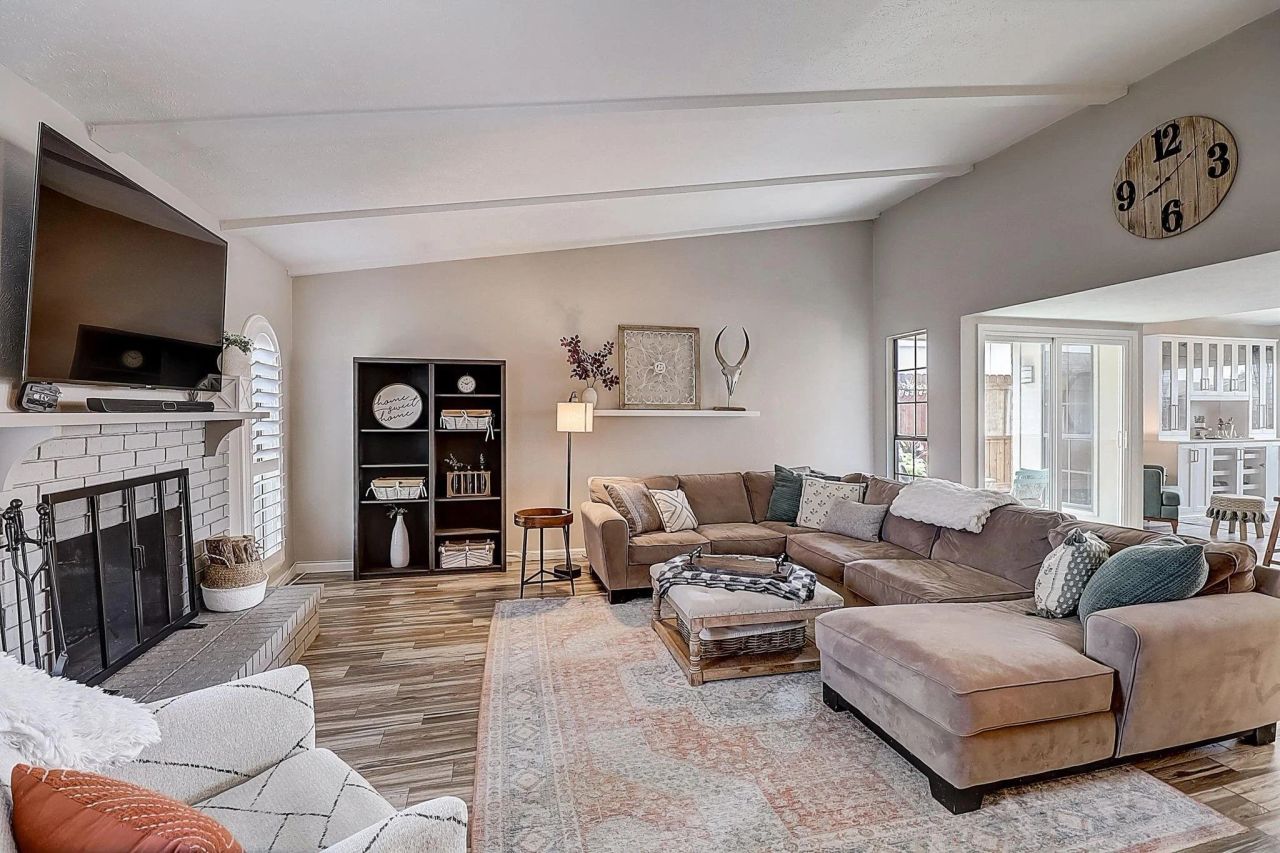
None of these require a renovation. But each one matters more than most sellers expect.
- Natural light. Open the blinds. Pull back the curtains. A bright home feels bigger, cleaner, and more alive. A dark home feels heavy and small, often before a buyer has processed anything else.
- Temperature. Keep it comfortable — 68–70°F in winter, 72–74°F in summer. If a buyer walks in and it’s stuffy and warm, their subconscious says "uncomfortable." They’ll start thinking about leaving before they’ve seen the kitchen.
- Smell. Neutral is the goal. No heavy candles or air fresheners — buyers assume you’re masking something. Just clean air. No pet odors, no cooking smells, no mustiness. Just clean air.
- Cleanliness. Not just tidy. Actually clean. Floors, counters, bathrooms, windows. Visible dust or grime signals a lack of care, leaving the buyer wondering what else hasn’t been maintained.
- Decluttering. Less is more. Clear the counters. Thin the closets — buyers will open them. Remove personal items. You want the buyer imagining their life in the space, not feeling like they’re intruding on yours.
It’s Not Just About Staging
Staging helps. But staging a home that isn’t clean, bright, and emotionally ready is like polishing a car with a broken engine. It looks good from the curb, but it won’t get you where you want to go. The foundation has to be there.
That means fixing the small things — the loose handle, the chipped paint, the burned-out bulb. Making sure the systems of the house feel solid. And it means the seller being ready for what comes next, because that readiness creates an environment that invites a buyer to stay rather than leave.
What Buyers Feel vs. What They Say
Buyers won’t tell you the real reason they’re not making an offer.
They’ll say "it’s not quite what we’re looking for" or "we want something a little more updated." What they mean is:
"This home doesn’t feel right. I can’t picture myself here."
And once that feeling sets in, no amount of price negotiation will overcome it.
How to Prepare a Home That Invites an Offer
If you’re thinking about listing in 2026, here’s where to start:
- Walk through your home as a buyer would. What do you notice first? What feels off? What would make you hesitate?
- Fix the small things — not a full renovation, but the loose handle, the touch-up paint, the burned-out bulb.
- Open the house up. Let in the light and the air. These matter more than most sellers realize.
- And commit to keeping it show-ready throughout the process, because the cost of a long time on market — both emotional and financial — costs far more than the inconvenience.
The Bottom Line
Buyers make emotional decisions and justify them with logic.
If your home feels unloved — or if the seller behind it feels stuck — no amount of square footage or high-end finishes will overcome that. But when a home feels genuinely welcoming, and the seller is ready to move forward, buyers find reasons to say yes.
Preparing a home to sell isn’t just about staging. It’s about creating an environment — and a mindset — that invites an offer.
Thinking about listing your home?
Let's talk about what it takes to prepare for the right outcome.