In our 2025 Plano Annual Market Report, we revealed that 29% of homes listed last year didn't sell. That's nearly one in three sellers who had to pull their listing, relist, or accept less than they hoped for. This is the second article, in my home-sellers series where I'm sharing an insider's perspective on what separates the homes that sell from the ones that sit — so more sellers can get it right in 2026.
When most agents price a home, they pull comparables—recently sold homes in the neighborhood with similar square footage, bed/bath count, and features.
It's standard practice. And it's often misleading.
Here's why: Comps tell you what sold. They don't tell you what buyers are choosing right now.
In Plano, that distinction matters more than most sellers realize.
The Problem With Relying on Comps
Let's say you're listing a $950K home in a desirable West Plano neighborhood. Your agent pulls three comparable sales from the last 90 days. All three sold between $925K and $975K. So your agent suggests pricing at $965K.
Sounds reasonable, right?
Except those three homes sold in a different market than the one you're entering today.
Maybe inventory has increased since then. Maybe interest rates shifted. Maybe two new listings just hit the market that make your home look dated by comparison—even if your agent hasn't seen their interior photos and staging.
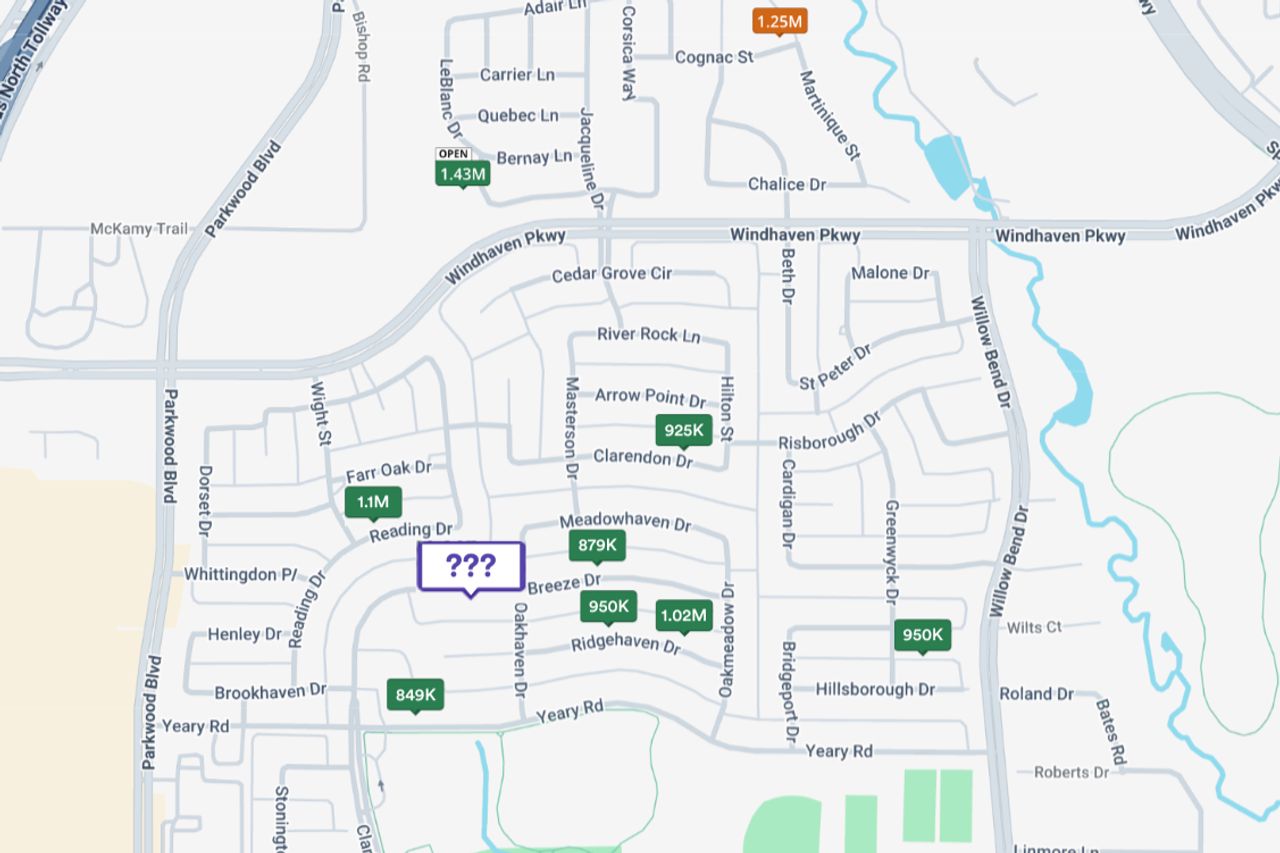
Your competition isn't the homes that sold three months ago. Your competition is the homes that are active right now—the ones buyers are touring this weekend.
What Buyers Are Actually Comparing
Here's what happens when a buyer in your price range starts their search:
They set their filters: $800K–$1.1M, 4+ bedrooms, West Plano or nearby areas with good schools.
Up comes a list of 15–25 active listings.
They're not thinking about what sold last quarter. They're thinking: Of these 15 homes I can see right now, which ones are worth my time?
Your home isn't competing with the past. It's competing with everything else available in their search results at this exact moment.
And here's the part most agents miss: at this price point, buyers are often flexible on location.
A buyer looking in West Plano is probably also looking in Frisco, parts of North Dallas, maybe even Prosper. They care about schools, commute, and lifestyle—but they're not locked into a single ZIP code.
That means your true competitive set might include homes you wouldn't traditionally consider "comps."
The School Zone Factor (And When It Matters)
Sometimes location really does matter.
Homes zoned for Mathews Elementary — a top-rated school in Plano ISD — carry a median sale price of $815,000, compared to $602,000 for the 75025 ZIP code overall. That's a 35% premium built directly into the market.
But here's the nuance: not all buyers at this price point care.
Some are considering private schools — Trinity Christian, Prestonwood, parish options. Others have older children or no children at all. For them, the school zone is irrelevant. If you're pricing on the assumption that every buyer values it, you may be pricing yourself out of a meaningful portion of your potential buyer pool.
The key is knowing what percentage of your buyer pool actually cares — and pricing accordingly.
How to Think About Pricing in a Choice-Rich Market
Instead of asking "What did similar homes sell for?", ask:
- What are buyers choosing right now in my price range?
- What's my home competing against — not just in my neighborhood, but across Plano and nearby areas?
- If a buyer has $1M to spend, why would they choose my home over the other 20 options available today?
This is where active competition analysis matters.
It's not just about pulling a list of active listings. It's about understanding how your home compares to the current inventory on a granular level. It's about knowing how your photos and presentation stack up, whether your home offers something — location, layout, condition, or a specific feature — that the competition lacks, and whether there's a pricing gap worth exploiting. If most homes are clustered at $950K and $1.05M, pricing at $995K can capture attention from buyers filtered out at both ends.
What Happens When You Get This Wrong
The data is pretty clear on what mispricing costs.
Looking at Plano homes listed in 2025: homes that required a price reduction sat on the market for a median of 68 days and closed at 91.8% of their original list price. Homes that needed no reduction sold in a median of just 9 days and closed at 98.2% of their list price.
On a $1M home, that 6.4 percentage point difference is $64,000. Plus two additional months of carrying costs. Plus the psychological weight of a listing that isn't moving.
There's also the market perception problem. After 60–90 days, buyers start wondering what's wrong with the home. A late price reduction might actually make things worse — now you're fighting both an elevated price and a "damaged goods" perception. A home that starts overpriced at $965K often ends up selling for less than it would have if it had been priced correctly at $940K on day one.
Underpricing carries its own risk, though it's more situational. In a low-inventory environment with high demand, an underpriced home can attract multiple offers and get bid above list — so the "right" price and the "low" price are often the same. But in a more balanced market with meaningful inventory, there's no guarantee that a low price triggers a bidding war. Pricing is always a conversation with current market conditions.
The Right Way to Price
Pricing isn't a formula. It's a strategy.
The right price is the one that reflects your home's condition, location, and features; accounts for what buyers can choose from right now; positions your home as a strong value relative to active competition; and leaves room to adjust if the market shifts.
That requires data — not just MLS comps, but real-time tracking of active listings, pending deals, price changes, and days on market.
It also requires judgment. Every home is different. Every seller's timeline is different.
The best agents don't just run comps. They understand the competitive landscape and help you position your home to win.
Thinking about listing in 2026?
Let's look at how your home stacks up against what's on the market right now.