
Should I Sell My Plano Home in 2026
— or Wait?
An honest read on the Plano market, by price tier, neighborhood, and your specific situation.
If you own a home in Plano and you've been wondering whether this is the right year to sell — you're asking the right question at the right time.
My honest answer: for most Plano homeowners, 2026 is a better year to sell than 2025 was. Inventory has stayed constrained rather than building the way it did last spring. Buyers are writing contracts at nearly the same pace as last year. And homes are still closing at 97% of original list price despite taking about a month to sell. The window is open.
But it's not unconditional. This market rewards preparation and accurate pricing more than it rewards timing. A well-prepared home at the right price will find a buyer in any month of the year. An overpriced or underprepared home will sit — in spring just as much as in fall.
There's also a forward-looking argument worth understanding before you decide to wait: new construction pipelines coming online in 2027 will introduce competition for resale sellers that doesn't exist today. If you're seriously considering a sale, the case for acting in 2026 is stronger than most people realize.
Keep reading for how this breaks down by price tier, neighborhood, and your specific situation.
What's Happening in the Plano Market Right Now?
The headline number that might catch you off guard: home closings in Plano are down about 25% compared to this time last year. That sounds concerning — until you look at what's actually driving it.
Listings are down too. 770 new listings have come to market in 2026 compared to 821 at this point in 2025. More importantly, buyers are writing contracts at nearly the same pace — 607 purchase contracts in 2026 versus 615 in 2025. The volume of closed transactions is lower so far, but the balance between buyers and sellers is actually healthier. Absorption is stronger this year than last.
Part of the closings gap is mechanical — a hangover from 2025. Homes contracted during the holiday slowdown, when buyers were choosing from stale year-end inventory, are what closed in January and February. The pipeline is now refreshing with spring inventory, and the under-contract numbers are already reflecting it.
A metric I track closely is net new listings: new listings minus cancelled and expired listings. That number tells you how much real supply pressure is actually building in the market, rather than just how many signs are going in yards. So far in 2026, net new listings have stayed in check. We haven't seen the inventory surge that defined 2025.
2025 showed a dramatic surge in net new listings during weeks 10–16, with sellers adding inventory at double the pace buyers were contracting. Updated quarterly.
2026 Q1: Net new listings and purchase contracts through week 14. The market is tracking more balanced than the same period in 2025.
The number that matters most for sellers right now: homes are closing at 97% of original list price. Despite a median days on market of 33 — elevated compared to recent years — sellers who price correctly are still getting paid. The market is moving slower, but it isn't soft.
What's driving the higher days on market isn't weak demand. It's a lack of buyer urgency. Buyers are present and active — they're just taking their time. The homes that earn fast offers are the ones that give buyers a reason to act. The homes that sit are the ones asking buyers to compromise.
April and May are the key months to watch. Last year, weeks 10 through 16 brought a surge of new listings that outpaced buyer activity by nearly 2:1 — the moment the spring market tipped against sellers. We haven't hit that point yet in 2026, and the early signals are more balanced. But the spring inventory build is the variable worth monitoring.
How Does Your Situation Change Whether You Should Sell in 2026?
The Plano market in 2026 is generally favorable for sellers — but "generally favorable" doesn't tell you what to do. Your situation, price point, and timeline matter. Here's how the answer changes depending on where you are.
The typical move-up seller in Plano has a growing family, kids in Plano schools, and a Central Plano home that made sense five years ago but doesn't quite fit anymore. 2026 is a genuinely good market for you — possibly the best in recent memory for a move-up buyer-seller combination.
Here's why: every price tier in Plano currently has supply. You're not going to sell your home and then find yourself unable to locate the next one. The inventory that paralyzed move-up buyers during the pandemic — when there was nothing to buy — doesn't exist today. You have choices on the buy side.
The rate objection is real but answerable. Yes, your payment is probably going up. But you're not a first-time buyer this time. Plano home values are up almost 100% over the last decade. If you've owned for more than a few years, you're sitting on significant equity that can be rolled into the next purchase, used to buy down your rate, or both.
There are also financing tools worth knowing about that most people don't realize still exist. Buy-before-you-sell programs — bridge loans, and programs like Homeward and Knock — were created during the pandemic to help homeowners unlock equity and move into their next home before selling the current one. For a move-up seller with young kids who doesn't want to live in a model-home-condition house for 60 days of showings, these programs can be a genuine solution.
My verdict for the move-up seller: let's go. The market conditions, the available inventory, and the financing tools all point in the same direction.
One of the things that makes Plano unusual is that people don't really leave. The population is aging in place, and a lot of long-term Plano homeowners are reaching the point where the house feels like too much — too many rooms, too much maintenance, too much to manage.
If that's you, 2026 is a reasonable window to act — and the case for waiting is weaker than you might think. Plano home values have been stable. They're not declining, but I also don't expect them to skyrocket in the next couple of years. The market is probably in for more of the same — steady, resilient, without dramatic appreciation. If you're waiting for values to surge before you sell, I wouldn't hold your breath.
The more common obstacle I see with downsizers isn't financial — it's emotional. A home you've lived in for 20 years carries memories that a buyer will never see. The risk is letting that emotional connection become rose-colored glasses about condition. Buyers will feel the warmth of a well-loved home. They won't assign value to the specific memories inside it.
The most useful thing I can suggest for a downsizer preparing to sell: go tour your competition. Walk through the homes your buyers will also be considering before they see yours. See what they see. That conversation — with yourself, before we ever talk about price — is worth more than any CMA I can hand you.
The good news is that Plano has genuinely good options for what comes next. Central Plano has entire neighborhoods of one-story homes. West Plano has townhomes and zero-lot-line homes at Legacy West. For a higher-end downsizer looking for a true lifestyle upgrade, Sur Le Lac and Winrose Tower offer something different altogether.
Note for homeowners 65 and older: Texas allows you to transfer your current property tax ceiling to your next home — a portability provision that can preserve a currently low tax amount. It's not a reason to make a decision, but it's worth knowing about when you're running the numbers.
If you're moving for work or family, the timing conversation looks different — because in most cases, you don't have the luxury of waiting for perfect conditions. The decision has already been made. What matters now is execution.
The good news is that you're leaving from a strong position. Plano's absorption is better than most nearby cities. The buyer pool is broad, the price point draws serious buyers from across DFW, and more people are moving into Plano than out of it. You're not selling a niche product in a thin market. You're selling in one of the most stable and consistently in-demand submarkets in North Texas.
This is when you're glad to be a Plano seller.
For a time-driven move, pricing is the most important variable — and the instinct to test the market with a higher number is the one most likely to cost you. In a dynamic market like Plano, you can't truly underprice a well-presented home. If buyers see value, they'll compete for it and bid it up. What actually costs money is chasing the market down with price reductions while your days on market accumulate.
One practical note: if you're relocating through a large employer, ask about their relocation program. Many have evolved significantly — employees can often choose their own agent rather than being assigned one. A great agent matters when your sale needs to be executed well, and under a timeline.
If you had a listing expire or get withdrawn in 2025 or earlier, you're probably carrying some frustration right now. Maybe even some doubt about whether selling is realistic at all.
Here's my honest read: in most cases, a listing that didn't sell was an execution problem, not a market problem. A motivated seller with the right strategy can beat a difficult market. The sellers who succeeded in 2025 weren't the ones with the best timing — they were the ones who priced accurately, prepared the home well, and adapted when the market gave them feedback.
The most common root cause I see in failed listings is a mismatch between property condition and price. It usually starts with presentation: a home that doesn't show well can't be photographed well, which affects how many buyers are willing to schedule a tour in the first place.
The better news: 2026 gives you a more favorable backdrop to re-enter. Inventory is more constrained than it was during the spring 2025 surge. You'll have less competition now than you did then. That macro factor is working in your favor. But the macro tailwind only matters if the root cause gets addressed. Re-listing the same home at the same price with a new sign in the yard is not a reset — it's a repeat.
How Does Your Neighborhood Affect the Decision?
Plano isn't one market. It's three distinct submarkets that happen to share a city boundary — and where you are in the city shapes your timing decision as much as your price point does.
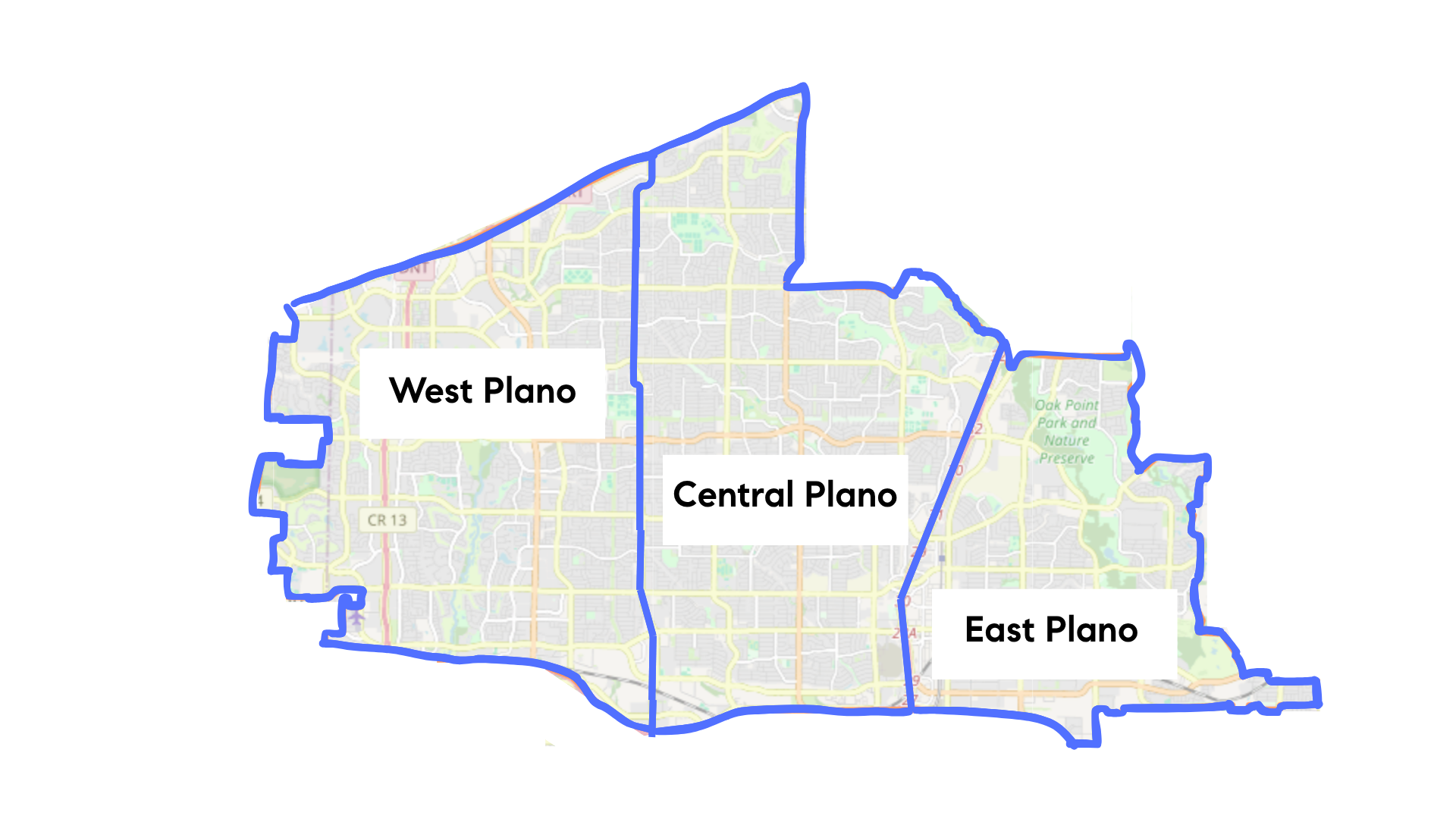
These boundaries roughly align with Plano's three high school attendance zones — West, Senior, and East — a useful mental map if you're orienting yourself.
High End & Luxury. Predominantly 1990s single-family construction, premium location, highest price per square foot.
Mid-Market. The geographic and demographic core. Highest transaction volume, housing stock from the 1970s through 2000s.
Entry Level, concentrated. Older stock, most accessible price point, tightest supply conditions in the city.
West Plano is more seasonal than the rest of Plano. Q2 and Q3 — spring through summer — bring meaningfully more activity here than the rest of the year. If you're in West Plano and you have flexibility on timing, the spring window is real.
But there's an important exception: updated, move-in ready homes in West Plano sell year-round — sometimes with multiple offers, regardless of the month. Buyers here would rather pay a premium to avoid a renovation than manage one. The perceived hassle of remodeling is high and the willingness to pay to avoid it is real.
The condition story in West Plano is the most important thing to understand heading into 2026. Of the 87 active High End listings in Plano right now, 50 are in West Plano — predominantly 1990s builds. The homes that are actually moving are the ones that present well. The ones that don't are accumulating days on market.
There's also a forward-looking dynamic worth naming. The Willow Bend Mall redevelopment has the potential to introduce new lifestyle product in West Plano by 2027. A buyer in 2027 comparing a dated 1990s home at $950K against a brand new lifestyle alternative at a similar price point will feel that comparison acutely. Selling before that comparison exists is a real strategic consideration.
The competitive pressure from Frisco is real but currently manageable — Frisco's market is softer than Plano's right now. And Plano's lifestyle amenities hold their own: Legacy West over The Star, Gleneagles over Stonebriar, the only Whole Foods in the corridor, the only Equinox.
Central Plano is steady-eddy. Sales happen year-round, volume is consistent, and this submarket represents the majority of Plano's total transaction activity.
The challenge for sellers here is standing out in a market where there's always inventory. Central Plano's housing stock — predominantly 1970s through 1990s construction — means dated homes are the norm, not the exception. Buyers shopping in this range have seen enough dated kitchens and original bathrooms that they've become efficient at passing over the ones that don't earn their attention.
The sellers who do well in Central Plano aren't necessarily the ones with the best homes. They're the ones who tell the clearest story. A well-staged, well-photographed, accurately priced Central Plano home creates a different emotional experience than the same square footage that hasn't been prepared. Buyers shouldn't have to imagine what the home could be — they should be able to see what it already is.
Aspirational pricing is punished more visibly here than in any other Plano submarket. Buyers have real alternatives — including new townhouses at Collin Creek and newer product in West Plano — and they're not going to stretch their budget on a home that asks them to compromise.
East Plano is the most active market in the city right now relative to supply. Entry Level inventory — which is concentrated here — is running at about 1.3 months citywide, the tightest of any tier.
The competitive set here crosses city lines. A buyer with an East Plano budget is also looking at East Allen, Richardson, and Garland. Condition matters even at this price point. These buyers can't afford to fix major problems post-close, and many are using FHA financing or down payment assistance with little room for surprises. A home that's presentable and inspection-ready has a real edge.
The forward-looking story for East Plano centers on Lavon Farms — a 626-home development breaking ground in late 2026 with market impact expected in 2027 and beyond. New construction here will likely price above the current East Plano median, which means it's more likely to pull values upward than compete directly with existing inventory. But it will change the landscape, and sellers who act in 2026 are selling into a cleaner competitive environment than 2027 will offer.
What Should You Expect If You List in the Next 90 Days?
Not the optimistic version. The honest one.
Don't rush to market just because it's spring. Launching before your home is ready, just to capture a date on the calendar, is one of the most common and costly mistakes I see sellers make. A home that hits the market underprepared doesn't get a second first impression. Presentation readiness matters more than launch date. If you need two more weeks to get the home right, take them.
What to expect on days on market
The top 25% of Plano homes are still selling in 7 days or less. What has changed is the median — currently 33 days overall, with variation by tier. High End homes are moving at 17 days on average. Mid-Market and Entry Level are running closer to 35–36 days. Days on market will likely compress as spring progresses — that's the seasonal pattern. But it will remain elevated compared to pandemic-era numbers that sellers still reference as normal.
If your home hasn't had meaningful showing activity in the first two weeks, that's a signal worth paying attention to — not a reason to panic, but a reason to have a frank conversation about pricing or presentation.
On multiple offers
Multiple offer situations happen, but they're not the norm right now. In 2026 YTD, about 15% of homes sold above asking price — roughly 1 in 15 homes is seeing genuine multiple-offer competition. Updated, well-presented homes in high-demand locations are the ones generating that activity. For most sellers, the realistic expectation is one serious offer worked carefully, not a bidding war.
Budget for concessions
Concessions are standard practice in this market — not a sign of weakness, and not something to be surprised by. Budget 1–2% of your sale price going in: roughly 1% for buyer closing cost assistance, and another 1% as a buffer for repair-related negotiations after inspection. You may not use all of it. But planning around it protects your net proceeds from a surprise late in the transaction.
One important relationship to understand: concessions increase with days on market. The longer a home sits, the more leverage a buyer has to ask for them. Accurate pricing from day one isn't just about speed — it's about protecting your bottom line.
The thing sellers consistently underestimate
Most sellers tell me they're patient. What they usually mean is they're patient in the abstract — patient in concept, before the sign goes in the yard. Once the home is active, patience gets harder. The first week with no offers feels different than they expected.
Here's what I tell every seller before we list: don't be aspirational on pricing — be faithful. Faithful that the market will pay you what your home is actually worth. What you want to net and what the market will pay are not always the same number. The sellers who do best are the ones who accept that early, not after 45 days on market.
The other variable sellers rarely anticipate: your neighbors. A well-prepared neighbor who lists below you doesn't just compete with you — they reframe what buyers think your home is worth. You can't control what your neighbors do. You can control how quickly you adapt when they do it.
Thinking about listing this spring?
A 15-minute phone call can give you a clear picture of where your home stands in the current market — before you've committed to anything.
What Happens If You Wait 12–18 Months to Sell?
Some sellers have a genuine reason to wait. If you're waiting because you hope conditions will be meaningfully better in 2027, read this carefully.
Uncertainty doesn't resolve on a schedule
The most common reason sellers give for waiting is that the world feels uncertain right now. Tariffs, interest rates, geopolitical noise, economic signals pointing in different directions. I understand the instinct. But here's the honest reality: I can't predict the future. What I can tell you is that 2026's uncertainty doesn't automatically resolve into 2027's clarity. Waiting for certainty in real estate — or in life — is usually just waiting.
Plano is not going to become unpopular in 12–18 months. The fundamentals that make it a stable, resilient market — corporate demand, Plano ISD, the lifestyle infrastructure, its position between Dallas and Frisco — don't evaporate. But the competitive landscape for resale sellers is likely to get more complicated, not less.
What 2027 introduces that doesn't exist today
Lavon Farms breaks ground in late 2026 — a 626-home development in East Plano with market impact expected in 2027 and beyond. The more significant dynamic for West Plano sellers is the Willow Bend redevelopment. In some form, new lifestyle product is coming to West Plano. A buyer in 2027 comparing a dated 1990s home against a brand new lifestyle alternative at a similar price point will feel that comparison acutely. Selling before that comparison exists is a real strategic consideration.
The pandemic era isn't coming back — and that's fine
A lot of sellers are quietly waiting for 2021 conditions to return. Multiple offers on everything. Homes selling in 48 hours. Buyers waiving inspections. That market was the anomaly — a once-in-a-generation collision of pandemic disruption, stimulus money, and historically low rates. What we have now is actually a normal market. Homes take a month to sell. Buyers do inspections. Concessions happen. That's not a broken market — that's how real estate has worked for most of the last 30 years.
If you do have 12–18 months — use them well
If waiting is genuinely the right call, treat that time as preparation runway, not a holding pattern.
- Get a pre-listing home inspection. Identify the critical items you'd want to address before a buyer's inspector finds them. The surprises that kill deals late in a transaction are almost always things the seller already knew about.
- Start watching the market seriously — not Zillow's estimate of your home's value, but actual weekly activity in your neighborhood. What's listing, what's selling, what's sitting, and why.
- Declutter — more than you think you need to. People accumulate more than they realize, and buyers need to be able to see the home, not the life you lived in it.
- Make targeted updates in the spaces that carry the most weight. The kitchen is where buyers spend the most time during a showing. The primary bedroom is where they project their daily life. These two spaces deliver the highest return on preparation investment.
How a Plano Home Sale Strategy Session Works
If anything on this page has you thinking seriously about selling — whether that's in 90 days or 18 months — this is what a conversation with me actually looks like. Most agents show up to your house with a listing presentation. I do it differently — and the difference starts before anyone visits anyone's house.
A 15–20 minute phone call
Before I come to your home, I want to talk on the phone. Not to sell you anything — to get to know you and understand your situation. What are your goals? What's your timeline? I already track your neighborhood. I know what's listed, what's sold, what's sitting and why. So by the time we talk, I'm not starting from scratch — I'm applying what I already know to your specific situation.
We meet at your house
This is a conversation, not a presentation. We'll walk the home together. You'll ask questions about the selling process, about how to prepare the home, about what buyers in your price range are actually looking for right now. I'll give you honest answers — including the ones that are sometimes uncomfortable to hear. We'll talk about pricing strategy and what I think the home is probably worth in the current market — not what you hope it's worth, not what Zillow says, but what a well-informed buyer is likely to pay based on what they're choosing between today.
We agree on a plan — or we don't
If we decide to work together, we'll shake hands and I'll go back to the office to prepare a listing agreement. From there, we build the go-to-market strategy together. Depending on your situation, that might include a phased marketing approach — starting with a Private Exclusive or Coming Soon period before going active on the MLS. This isn't the right strategy for everyone, but for certain sellers it's a meaningful advantage.
What you leave with: Not a packet. Not a Zestimate printout. Clarity — about what your home is worth today, what the market is actually doing in your neighborhood, and what needs to happen between now and a successful closing. That clarity is worth something whether you list in 30 days or 18 months.

Schedule a Conversation
A no-pressure call — 15 minutes — to talk through your situation, your home, and whether 2026 is the right year for you to sell. No packet. No pitch. Just a direct conversation with someone who tracks this market every week.
Schedule Now →